.png)
How Compost Helps Plants Grow: The Biology Behind Healthy Garden Soil
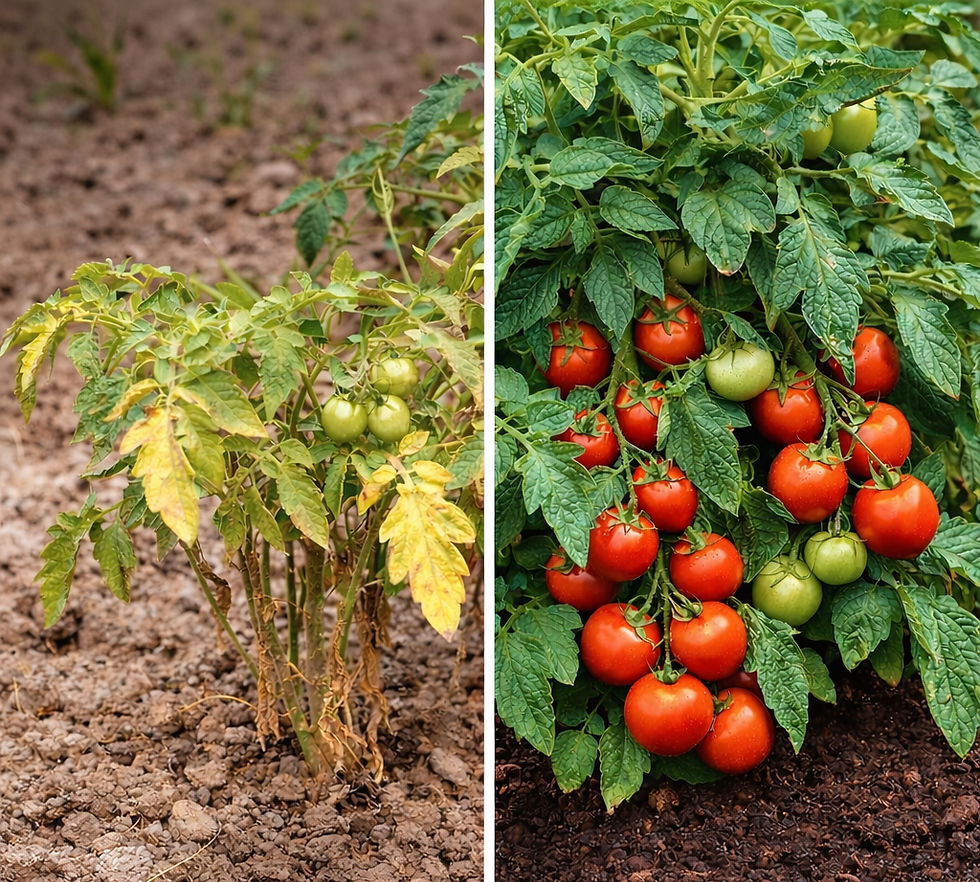
Many gardeners run into the same frustrating problems every season. Plants start strong in the spring, but by mid-summer leaves turn yellow, growth slows, and harvests become smaller than expected.
This often leads gardeners to search for solutions like fertilizers, plant food, or soil amendments. But the real issue usually isn’t a lack of nutrients.
The real issue is soil biology.
Healthy gardens depend on a living soil system that allows plants to access nutrients naturally. One of the most common ways gardeners try to improve that system is by adding compost.
Understanding how compost works and why it helps plants grow can make a huge difference in the long-term success of your garden.

What Compost Actually Is
Compost is simply decomposed organic matter.
It can include materials like:
Leaves
Food scraps
Grass clippings
Plant debris
Garden waste
As these materials break down, they transform into a dark, nutrient-rich material filled with beneficial microorganisms.
These microbes are the real value of compost.
While compost does contain nutrients, what makes it powerful is the living biology inside it.

How Compost Helps Plants Grow by Supporting Soil Microbes
Gardeners use compost for several important reasons.
Many garden soils become compacted or depleted over time. Compost helps loosen soil, improve aeration, and create better root environments for plants.
Better soil structure allows water and oxygen to move through the soil more effectively.
2. Compost Adds Organic Matter
Organic matter is critical for long-term soil health.
It helps soil hold water, improves nutrient retention, and supports the microorganisms that plants depend on.
3. Compost Introduces Beneficial Microbes
One of the biggest benefits of compost is the microbial life it introduces into soil.
Compost contains bacteria, fungi, and other microorganisms that help break down organic materials and release nutrients plants can use.
But compost alone isn’t the full story. The Real Engine of Plant Growth: Soil Microbiology
Healthy soil runs on a complex ecosystem often called the soil food web.
This system includes organisms like:
Bacteria
Fungi
Protozoa
Nematodes
These organisms interact with plant roots in ways that help plants access nutrients more efficiently.
Instead of plants simply absorbing nutrients directly from fertilizer, soil microbes help cycle nutrients continuously.
They break down organic matter and minerals into forms plants can actually use.
How Plants and Soil Microbes Work Together
The relationship between plants and soil microbes is one of the most important biological partnerships in nature.
Plants release small amounts of sugars through their roots. These sugars are called root exudates.
These sugars feed soil microbes.
In return, those microbes help break down nutrients and make them available to the plant.
This exchange happens constantly in healthy soil and allows plants to receive nutrients when they need them.
This is why gardens with strong soil biology often produce healthier plants with more consistent growth.
Why Some Gardens Still Struggle Even With Compost
Many gardeners add compost but still experience problems like:
Yellowing leaves
Poor plant growth
Inconsistent harvests
Soil that dries out quickly
This usually happens because the soil biology is not fully active or balanced.
Compost introduces microbes, but those microbes need the right conditions to thrive.
Factors like moisture, oxygen, carbon sources, and root activity all influence how well soil biology functions.
Without a strong microbial system, plants may still struggle to access nutrients effectively.
Building Living Soil
When soil biology is strong, several things start to happen:
Nutrients cycle more efficiently
Plants develop stronger root systems
Soil structure improves
Water retention increases
Plants become more resilient to stress
Instead of constantly feeding plants directly, gardeners focus on supporting the soil system itself.
Over time, this approach leads to healthier plants and more productive gardens.
Supporting Soil Biology Naturally
This is why many gardeners focus on practices like:
Adding compost
Using mulch to protect soil
Avoiding excessive soil disturbance
Introducing beneficial microbial inputs
These approaches help rebuild the natural processes that healthy soils rely on.
At Back to Earth Works, our goal is to support that same system by delivering the food, shelter, and beneficial microbiology needed to build living soil.
Instead of forcing plant growth, the focus is on restoring the biological processes that allow soil to support plants naturally.
The Bottom Line
Healthy gardens don’t depend on fertilizers alone.
They depend on living soil.
Compost plays an important role by adding organic matter and introducing beneficial microbes, but the real goal is building a thriving soil ecosystem that supports plants year after year.
When soil biology is active, plants grow stronger, access nutrients more efficiently, and produce more consistent harvests.
If you're looking to improve plant health, increase yields, and build better soil over time, focusing on soil biology is one of the most important steps you can take.



Comments